
Stop going to battle with your child’s aggression.
Start responding in ways that actually work.
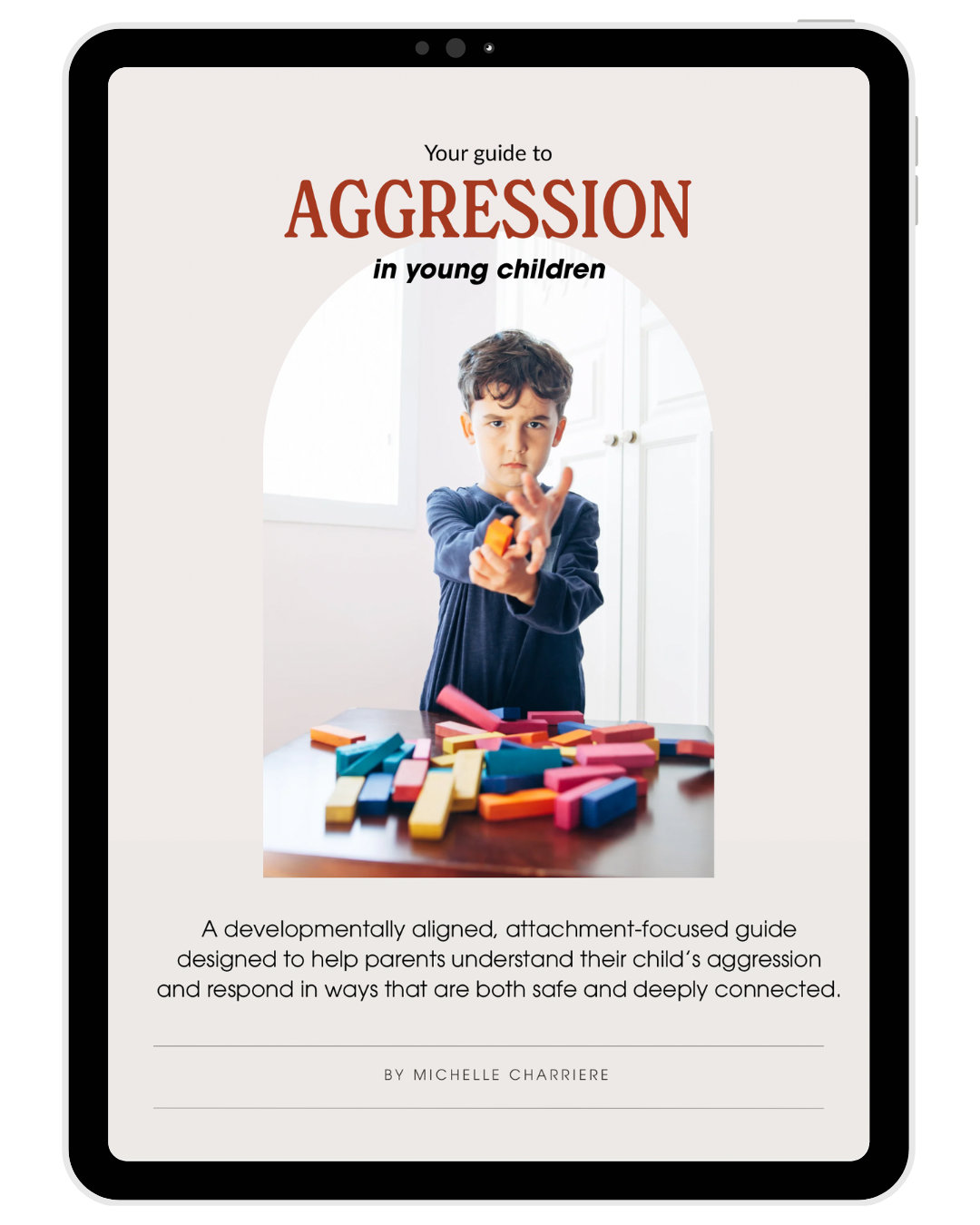
A practical, research-backed guide that helps you understand what's really driving your child's aggression, and respond in ways that actually strengthen your relationship.
For children ages 1-6
Instant download • Practical, real-life strategies • Created by a birth–5 mental health specialist
You’re here because your child is yelling, hitting, throwing, or having big reactions, and you’re trying to make sense of it all.
You’re thinking: “What happened to my sweet baby?”
Is this much aggression even normal?
Am I doing something wrong — is it me?
How do I set boundaries without damaging our connection?
Can I actually reduce these behaviors without constant battles?
And what do I do when I’ve already yelled... and instantly regretted it?
You’re also getting a lot of advice.
“Punish it.”
“Use time-outs.”
“Be more firm.”
And for some people, even worse—physical punishment.
But none of that feels aligned for you. And at the same time, doing nothing doesn’t feel like an option either.
So you’re stuck in the middle wondering:
What do I actually do instead?

There’s a reason the tips and tricks you’ve tried from social media aren’t working, or only work briefly.
And it’s not because you’re doing them wrong.
The issue is that most strategies only address behavior at the surface level.
What you really need to do is look below the surface to meet your child’s underlying needs.
When you connect to their underlying needs, you support their development and strengthen their attachment to you.
This is where you see real change.
Introducing…
Your guide to
Aggression in Young Children
This is a practical, attachment-based guide that helps you understand and respond to aggression in children ages 1–6 in a way that supports regulation, connection, and your child’s developing social-emotional skills.
Instead of power struggles, confusion, or guessing what to do in the moment, you'll have a clear framework to follow.
This guide is for parents who want a different way of responding to aggression—one rooted in connection, not punishment.
This is for you if:
Your child is between the ages of 1-6
Your child has started hitting, yelling, biting, pushing, or throwing things
You want to understand why this is happening (and if it’s normal)
You’re tired of being told to just use time-outs
You want tools that actually help you connect while setting boundaries
You want to feel confident responding in the moment
You want to know how to repair after hard moments

What’s included?
A downloadable, printable PDF guide that is yours to keep forever where you will learn to:
Understand why your child's aggression is almost always developmentally normal and what it's actually communicating
Know exactly why certain situations trigger big reactions, so they stop feeling random and overwhelming
Have calm, specific words to use in the moment, instead of freezing or reacting in ways you regret
Set clear boundaries your child can actually respond to, without threats or bribes
Repair connection after hard moments so they don't linger for either of you
Personalize every strategy to your specific child through reflective activities throughout
Most approaches only address what's visible.
This guide helps you understand what's underneath.

A birth-to-5 mental health specialist with a Master of Advanced Study in Infant and Family Practice and a registered Circle of Security Parenting Facilitator. I've spent my career studying how young children develop, communicate, and regulate, and translating that into something parents can actually use. I created Babies and Brains because I kept seeing the same thing: parents doing everything right but missing the developmental piece that makes their child's behavior make sense.
I'm not here to teach you THE way to parent. I'm here to help you understand your child well enough to find your own way.

Hi, I’m Michelle
From parents who have been exactly where you are:
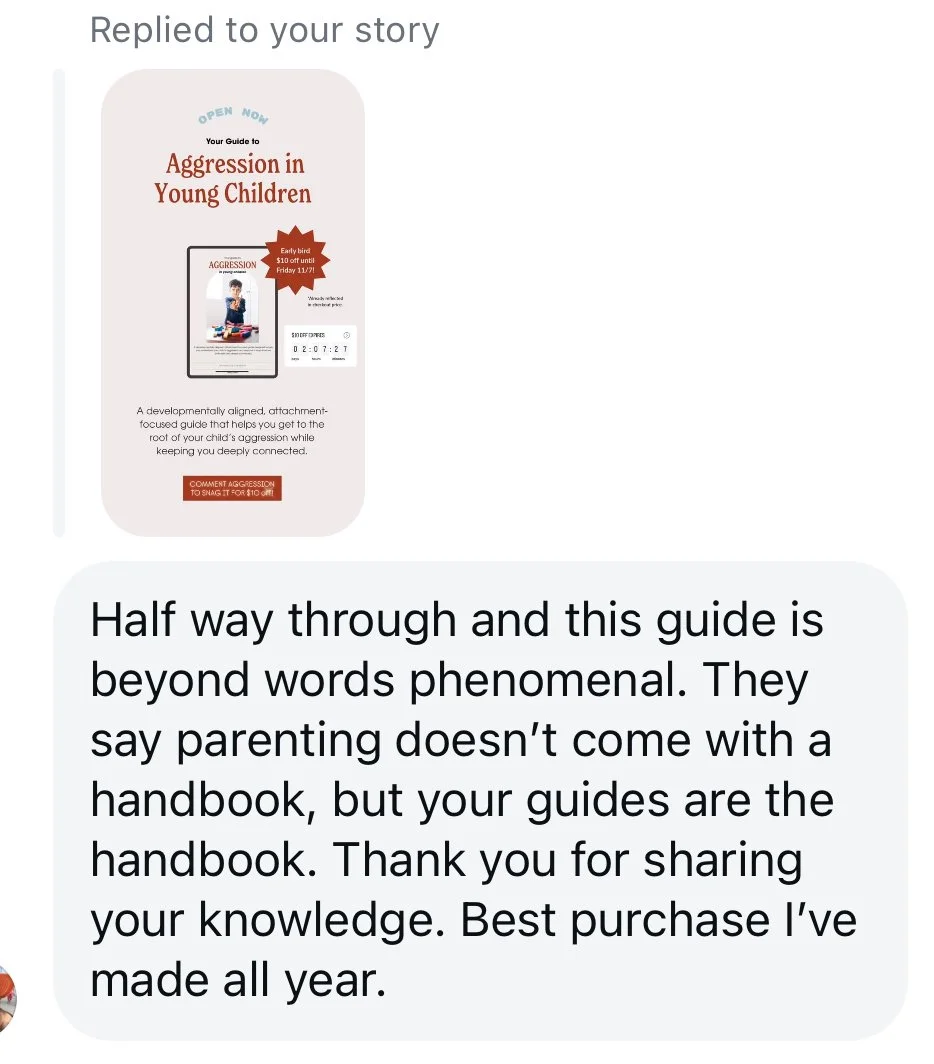
“They say parenting doesn't come with a handbook. Your guides are the handbook.”
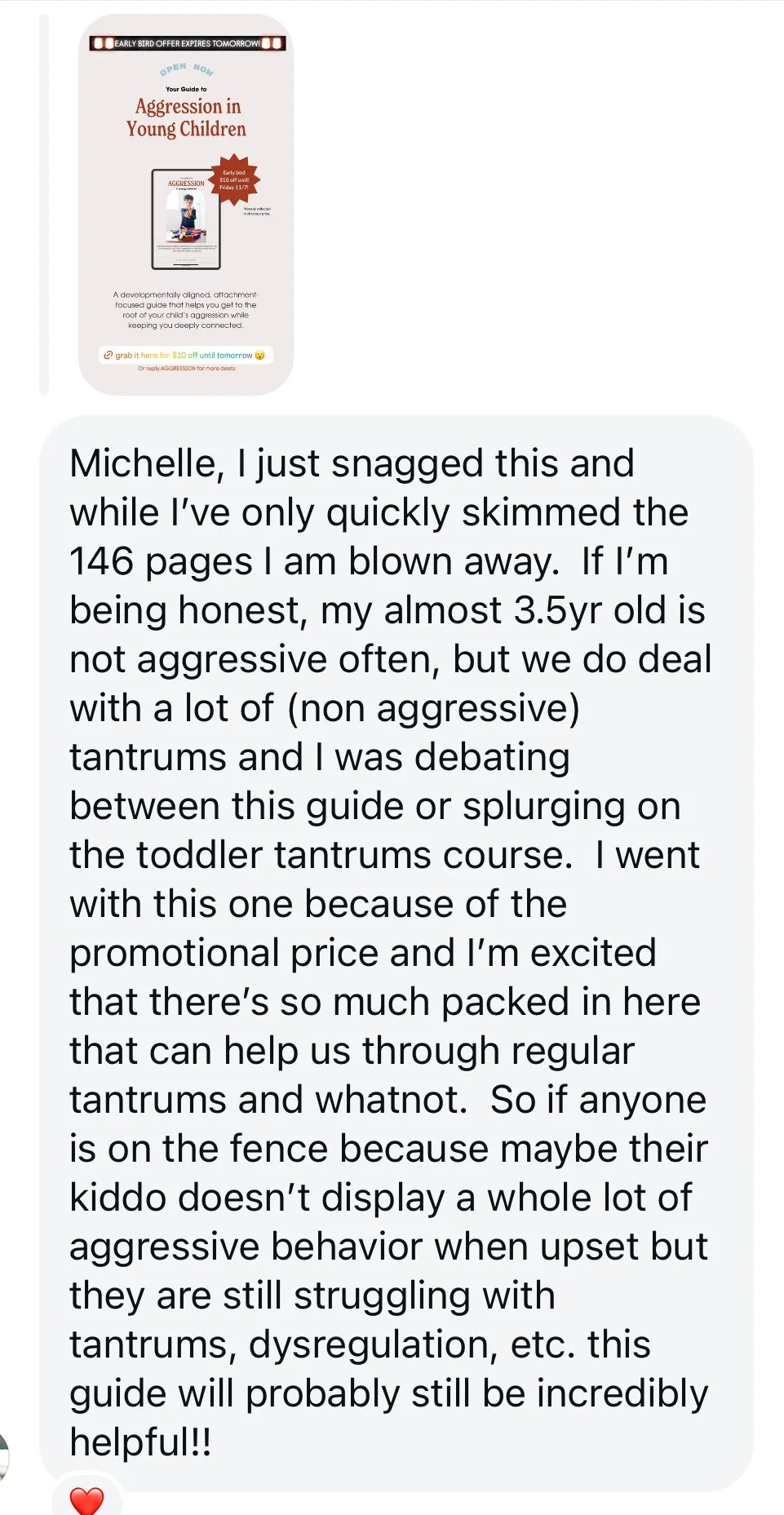
“If your child isn't very aggressive but still struggles with tantrums and dysregulation — this guide will still help.”
FAQ
-
The developmental information and examples primarily focus on the 1-5 age range (even 6), but, since this information builds a strong foundation of understanding, most of the tools you learn can be applied to slightly older children with modification.
-
You can download your guide at any time by logging in to your Podia dashboard with the email and password you used when you purchased.
Log in to your dashboard here.
-
The insights and tools in this guide teach you how to understand and connect to the unique child in front of you, making it applicable to the of majority parents and children. This guide discusses differences in temperament and sensory needs. This guide does not directly discuss diagnoses like Autism or ADHD.
-
This guide is intended for educational and self-help purposes only. It is not a substitute for professional, individualized mental health care or therapeutic services.
While the insights and tools offered are designed to support parents, their effectiveness will depend on how they are implemented and each family’s unique circumstances. There is no guarantee that the information or strategies provided will produce specific results.
Some individuals or families may benefit from additional professional support, such as therapy or consultation with a qualified mental health provider to develop a more individualized treatment plan.
-
Due to the digital nature of this guide, I'm unable to offer refunds. But if you have any questions before purchasing or concerns after, I'm always happy to chat — reach out at michelle@babiesandbrains.com.
-
Yes, once you purchase this guide, you will have access to any future updates made. Once updated, the new version of the guide will appear in your Podia dashboard.
You don’t have to keep figuring this out alone.
You don’t need to stay stuck in uncertainty or constantly question whether you’re doing the right thing.
What you do need is a way to understand what’s really happening underneath your child’s behavior—and respond in a way that supports both regulation and connection.
You can start here.
For less than a single session with a child development specialist.
This guide is for informational and educational purposes only and is not a substitute for professional mental health, medical, or therapeutic advice, diagnosis, or treatment. If you are concerned about your child’s behavior or well-being, please consult your dedicated care team for individualized support.